----- Original Message ----
From: tsepin <tsepin@gmail.com>
To: chess-malaysia@yahoogroups.com
Sent: Thursday, September 6, 2007 11:07:57 AM
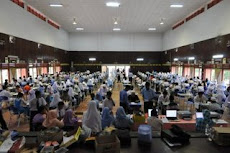
Subject: [chess-malaysia] 13th Kepong Juniors Open on 28 OctOn behalf of SJK(C) Kepong 2, I wish to inform that the school will be organising a 6-round competition on 28th OCTOBER (Sunday) at the school premise. A decision was made recently by the school PIBG that the event should be organised in the school premise as opposed to earlier report that the event will be held at Wilayah Complex. So, for those who wish to take part in this annual event, please dowlnload the form from the Files section, fill it up, attached a cheque of RM 15 (inclusive of lunch, snacks, and drinks) and post it to the given address in the entry form.
The categories to be contested: Under-08, Under-10, Under-12, Under-14, and Under-16.
Very attractive prizes awaiting you.
For more information, please call me @ 012-2984922
RgdsTse Pin
sesiapa yang berminat sila hubungi guru kelab anda
Monday, September 10, 2007

Thursday, July 5, 2007
The En Passant
The En Passant Pawn Capture

Every pawn, on its first move, has the choice of moving either one or two squares forward.
Look at this diagram.

Black may think, "If I move my pawn one square White will capture it so I'll move it two squares." and the position would be as shown in the diagram below:

However, White can still take the Black pawn as if it had moved only one square.

The new position would be as shown in the diagram below. White removes the black pawn from the board and places the White pawn on the square the Black pawn would have moved to if it had only moved one square forward.

This special way of capturing is called capturing en passant and is abbreviated e.p. En passant is a French expression which means "in passing" The en passant capture must be done immediately after the black pawn advances two squares. If White plays another move she cannot then decide to capture en passant!
Drawn
How Games are Drawn
 There are six ways to draw a game of chess:
1. Perpetual Check - If an opponent checks the enemy King repeatedly we call this perpetual check. Perpetual check is usually used by the weaker side to avoid losing the game. In the diagram below White is ahead on material and is threatening checkmate by moving the Queen to g7.

Black has a saving series of moves which give perpetual check:
1. Kh1 Qf1+
2. Kh2 Qf2+
3. Kh1 Qf1+
4. Kh2 Qf2+
There is no way White can avoid Black from checking her King so the game is a draw.
2. Stalemate - If the King is not in check but it is unable to move to a safe square we say that the King is stalemated and the game is drawn. Many beginners who are ahead on material mistakenly stalemate the enemy king. Beware! In the diagram below the White King is not in check but it has no safe squares to go to so the game is a draw.

3. Insufficient mating material - When neither side has enough pieces on the board to checkmate the enemy king then the game is drawn. It is impossible to checkmate with:
1. Just the two Kings on the board.
2. King and Bishop against a King
3. King and Knight against a King
4. King and two Knights against a King
4. Repetition of moves - If the same position occurs three times in a game then a player may claim a draw. The perpetual check position above is also a draw because the same position occurs three times.
5. Fifty move rule - If both sides have made 50 consecutive moves without making a capture or pawn move then a player may claim a draw.
6. Draw by agreement - Both players may feel that the position on the board is equal and consequently agree to a draw. Many Grandmaster games end in a draw in this way.
Check and checkmate
Check and Checkmate

Check
When the King is being attacked directly by an opponent's piece we say that the King is in check. In the diagram the Black King is being checked by the White Bishop.

If the King is in check it must be made safe immediately.
There are three ways to get out of check:

1. The King may move to a square which is not being attacked by an enemy piece.
In the diagram below the King has moved out of check.
2. A piece may be moved in between the King and the enemy piece to block the check.
In this diagram the Black Bishop blocks the check with her Bishop.

3. The piece that is attacking the King can be captured.
In this diagram the Bishop can be captured by the Black Rook.

This is the new position after the Rook has made its capture. The King is no longer in check!

Checkmate
If the King is in check and cannot get out of check then we say the King is checkmated and the game is lost.
In the diagram below, the White Queen checks the Black King.

Black is not able to do any of the following:
1. move to a square which is not being attacked by an enemy piece.
2. move a piece between the King and the enemy piece to block the check.
3. capture the attacking piece.
so Black is checkmated and has lost the game!
so Black is checkmated and has lost the game!
Chessboard
Setting up the Chessboard
 Chess is a very old game. People believe that it originated in India in the fourth or fifth century but no one really knows who invented it. Chess is an intellectual competition between two players and is a very logical game where luck plays little part. The winner is the person who solves the puzzles on the chess board better than her opponent.
The game is played on a squared board divided into 64 squares, alternating from light to dark. The board is always set up so that each player has the light square on her right-hand side. (Remember: light on the right). The Queen always stands on the square of her own colour. Thus, the light coloured Queen must stand on the light coloured square. A good way of remembering this is the saying: The Queen is a fashionable lady. She likes her dress to match her shoes!

The Chessmen
The pieces and pawns are called chessmen. They have different points to indicate how valuable they are. A Queen is worth 9 points so she is far more valuable than a pawn which is only worth 1 point. The King can never be captured and if he is in danger then he must move to a safe place or another chessman must make him safe. If he can not reach safety then the game is lost. The person with the White pieces always begins the game.
The table below shows how the chessmen are represented in printed material, the symbol given to it and its value.
Chessman Name Symbol Value
 The King K Invaluable
  The Queen Q 9 points
  The Rook. R 5 points
  The Bishop B 3 points
  The Knight N 3 points
  The Pawn P 1 point
 The Rook
How the Rook Moves and Captures

The Rook moves horizontally and vertically any number of squares, forwards or backwards. In the diagram the Rook can move to any of the highlighted squares.

In this diagram the Rook now has less choice of squares to which it can move because the other White pieces block its path. It can now only move to the highlighted squares.

If an enemy piece is standing on a square to which the Rook can move, it can be captured. In the next diagram, White is able to capture the Bishop with her Rook. She does this by removing the Bishop from the board and placing the Rook on that square instead.

The Rook captures the Bishop and claims the square for itself!

The Bishop
How the Bishop Moves and Captures
 The Bishop moves diagonally any number of squares, forwards or backwards. The diagram below shows all the possible squares to which the bishop may move. Each side has two bishops; one bishop moves along the light coloured squares and the other bishop moves along the dark coloured squares.
The Bishop's path can be blocked by other pieces on the chessboard. In the diagram below the Bishop now has less choice of squares to which it can move because the other White pieces block its path.

In the diagram below the White Bishop is able to capture the Rook. She does this by removing the Rook from the board and placing her Bishop in its place.

This diagram shows the position after the Bishop has captured the Rook.

Subscribe to:
Posts (Atom)